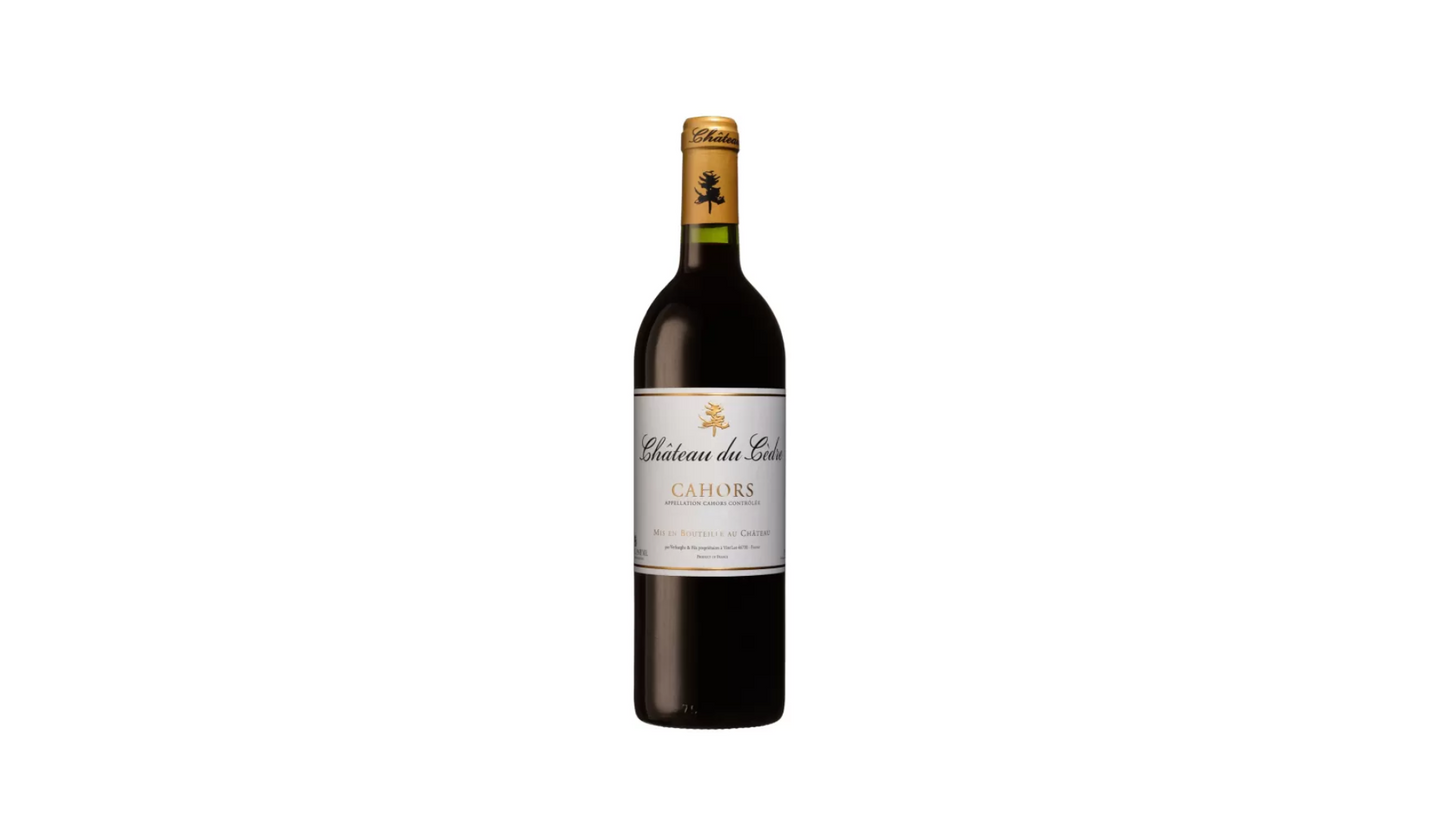
Alex's Notes on Château du Cèdre
I have long championed the wines of family owned and run Château du Cèdre, although this has not been a particularly arduous task given their stellar albeit somewhat under-the-radar reputation. Under-the-radar because Cahors is not Bordeaux - it's off the beaten track, a 3 hour drive south-east of Bordeaux, 113km north of Toulouse. And Bordeaux gets vastly more column inches.
This though is a significant part of their appeal! As well as their humility, and their determined focus as a family on sustainable organic farming.
They knew that if they produced wines of high quality, powerful and bold but with restrained alcohol (under 14% abv) and great drinkability, the buyers would come to them, and the word would get out.

TL;DR
Owned and run by the passionate and incredibly hard-working Verhaeghe family since 1973, Château du Cèdre is a pioneer and hero of the Cahors region. Through their work over the decades, they have lifted the reputation of Cahors to heights no-one would have thought possible, given how horrific the region's reputation had been for dirty, rustic wine, largely only consumed locally.
Many if not most producers in the region have followed their lead. This has been absolutely crucial for these producers and the region as a whole given the massive decrease in wine consumption in France brought about by environmental, health and road safety campaigns, urbanisation, changing work patterns, and generational changes. Not to mention rising quality expectations, with consumption shifting from quantity to selectivity. Those who followed their lead now make much less, but much better.
Red wine consumption alone has fallen about 90% since the 1970's, and it stands to reason that the vast majority of this decrease has been the consumption of very poorly made, dirt-cheap wine, with the old habit of drinking wine at lunch (and then driving home or back to work under the influence!) gradually dying a death. This hasn't affected quality wine producers to anything like the same extent, and any loss to their volume in France was made up for over time in exports.
However, there has again been an increasing trend in more recent years of declining consumption, almost worldwide I believe, especially of red wine (pink and fizz sales were still growing 2024-2025 albeit more slowly).
But this is said to be a decline - and it's a sharp decline - largely in sales of the big, fruit-bomb, overly alcoholic red wines; I feel a producer like Château du Cèdre might be less affected by this given their winemaking philosophy and more restrained alcohol levels, but I could be wrong. This is a worrying time for producers.

Winemaking & Ethos
Château du Cèdre do not look to make super-extracted, tannic, high alcohol blockbusters - which in the wrong hands Malbec, the principal grape of Cahors, can be capable of - but wines of freshness, finesse and food-friendliness, and they make every effort in the vineyard and winery to do so. What's more, their wines deliver so much quality at the prices they charge, especially when you benchmark them against equivalent quality Bordeaux.
While we talk about acidity a lot in white wines, it is mentioned less in red wines. But if like Château du Cèdre you work to moderate pH and thus retain acidity as much as possible in both the vineyard and winery, especially in a warm region like Cahors, then you not only retain freshness, liveliness and drinkability but also the ability for the wine to be drunk with a wide range of food.
Why is this important? Well, while important to my palate, and I'm a foodie too, MUCH more importantly as a producer you will sell a lot of your wine to sommeliers! And sommeliers are much more loyal than supermarket buyers.
Acidity is the food-friendly backbone of a wine: it is the unsung hero of food pairing that lifts each bite and keeps the palate alive. Some wines on their own may taste too acidic for some palates, but pair them with food and they come into their own. And some foods (e.g. Asian styles, full-flavoured oily seafood such as oysters) actually need high acidity, a good example being high acid sparkling wine with oysters.
Fattier cuts of meats such as lamb, goose and duck, as well as very gamey meats, are other examples, where reds with retained acidity manage to cut through the fattiness or gamey flavours and will lift these flavours on the palate; this will be the case with du Cèdre's wine. These foods will somehow feel succulent and light, bringing out flavours in both the meat and the wine, rather than feeling excessively heavy and overbearing as generally would be the case with an overly rich and alcoholic wine that has not retained sufficient palate-lifting acidity. No wonder, then, that their sales are mainly to restaurants, and some of the world's finest restaurants to boot.
Another aspect to their winemaking ethos is that they look to temper Malbec's high tannins, tannins being skin-derived phenolic compounds that impart the astringent drying sensation one gets in the mouth when drinking red wine. Lower tannins means a softer mouthfeel, and thus more finesse. Grape varieties differ in their tannin levels, with Malbec being one with a lot of them.
Some Bordeaux reds - indeed the most expensive ones - often shouldn't be drunk until they have a minimum of 10 years of age, due to the high amount of tannins making them taste astringent and masking their fruit flavours.
The science is that over time the tannins polymerise - link together - and longer tannin chains feel rounder, smoother, less aggressive. Indeed, over time as the tannin chains get ever longer, they become less soluble and eventually get so large that they precipitate out, forming part of the sediment in older bottles. This is why very mature wines taste much less tannic than they did when young. Also worth noting is that tannins have a preservative effect - they are antioxidants - which goes some way in explaining why wines high in tannins are able to age for so long, while those lower in tannins less so.
But Château du Cèdre don't want you to have to wait 10 years to drink their wines and unlike with Bordeaux, with the top wines being investment vehicles, there just isn't the same pull factor for cellaring Cahors and waiting for it to be ready to drink.
This is not to say du Cèdre's wines won't age, they do, beautifully; they do not lack tannins given they are made from Malbec, though they are softer, more integrated tannins, meaning the wine is approachable as soon as they release it. They achieve this by:
- using very little new oak: new oak amplifies tannins, as new oak imparts its own 'wood tannins'
- pressing the skins very gently: the harder you press, the more tannins you will extract
- long ageing in much bigger and older casks than the norm elsewhere: 5,700 and 500-litre barrels versus 225-litre barrels in Bordeaux, so a much lower ratio of wood surface to wine, very little extraction of wood tannins, and some oxygen ingress through the wood that softens the tannins.
It's sensitive, considered winemaking. They know that as Malbec comes with its own quite potent tannins, it doesn't need new oak to add even more! And that bold red wines don't need to taste of new oak, as so many do, but should more reflect the fruit and the land on which it is grown. And new oak is so expensive. This is what many winemakers - and drinkers - are now realising and it has become a trend in many regions. Château du Cèdre have just been a few decades ahead of the curve!

Sustainability
The estate was certified organic in 2012, although they had been practicing organics for quite some time beforehand: they stopped using chemical weedkillers in 1992 and ten years later abandoned synthetic plant protection products altogether.
To preserve microbiological life and to minimise soil compaction, the vineyards are grassed between rows while pruning, thinning, de-budding, lifting, leaf removal and green harvesting are all done by hand. Hard work, let me tell you; I've done it.
Their viticultural practices are primarily aimed at keeping their precious old vines in production, as these enable them to make such great wine. They only replant those that die, one by one. Such are the low yields, if they were making cheap plonk in huge quantities, these old vines, some being 68 years old, would have been grubbed up many years ago, which would have been a tragedy!
Farming organically has its drawbacks - the greatest of which is the use of copper as a fungicide (organic producers still do not have an alternative to copper) - but it's proven to be on the whole a significant win for the environment. Not to mention drastically reducing carcinogenic and endocrine-disrupting pesticide residues in the wine (e.g. a multi‑year study by CVUA Stuttgart comparing conventional and organic wines).
Château du Cèdre has almost single-handedly boosted the sustainability of Cahors as a region, by encouraging other producers to reduce their yields, to preserve old vines (minimising release of carbon stored in the soil), to halt their use of chemical pesticides, and to make quality the absolute priority. Through this approach, the vines are healthier and will live much longer.
Terroir
The oldest vineyard blocks of the estate date back to 1958. While their winemaking ethos strongly influences the finesse and aromatic complexity that they achieve in their wines, their vineyard soils also help to achieve this: one of their vineyard blocks is limestone scree (broken, weathered fragments of limestone).
Limestone stays cool, moderates pH in the fruit and helps to retain acidity, and due to this it is known to lead to wines with freshness, tension, and aromatic lift. Limestone is rare in this part of the world and clearly helps the estate to make the wines they do.
The other blocks are made up of rolled pebbles mixed with reddish sand on the surface, while clay and silica dominate the deeper levels. These result in wines with more density and richness.
Other contributing factors are the proximity of the river Lot which cools the air, as well as exposure to cooling autumn winds. It's a winning combination of various factors that keeps their alcohol levels in check and ensures finesse.
When I asked winemaker Jules Verhaeghe, son of current owner Pascal, how in a region like Cahors, and in the face of global warming, they manage to get all the wines they make to sit between 12.5% to 13.5% alcohol, his reply was that this was thanks to "a huge amount of work in the vineyard."
I would imagine this involves a lot of attention to detail in canopy management, boosting the vine's vigour, avoiding severe water stress, soil management (cover crops), managing the crop load (excess bunches = more sinks for sugar), and ensuring the fruit is adequately shaded by leaves. As well as a lot of experimentation as to the right time to harvest and perhaps combining a harvest of less ripe fruit with riper fruit, multiple passes, and harvesting at night.
Over time, they have also clearly chosen the right sites, and their limestone helps as it reflects sunlight, keeping the soil cooler and possibly moderating ripeness and thus alcohol. Remember, the more sugar that the fruit accumulates, the higher the alcohol will be (unless you don't ferment to dryness, but then you'll have a sweet red).
One thing (of many) I feel the wine industry does not effectively communicate is the staggering amount of work that has to be done in the vineyard to not only make a wine of quality but also a wine without a damaging environmental footprint.

Summary
Maybe the world's finest producer of Malbec?

#WineObsessed
France: Château du Cèdre 2022 - Malbec, Cahors (Organic, Vegan-friendly)