Alex's Notes on Rathfinny
Another producer with the highest of standards and, again, I know this from firsthand experience. A few years ago I spent time at the estate as part of their production team.
The marketing is strong and very polished and the location overlooking the Cuckmere Valley (near Eastbourne, where I live) is jaw-droppingly beautiful.
With two restaurants and rooms (known as The Flint Barns), this winery is well worth a visit.

TL;DR
Rathfinny is a very slick, very professional, very ambitious producer with a stated commitment to producing some of the world’s finest quality sparkling wine.
It was founded by Mark and Sarah Driver, who left careers in finance to pursue their dream of creating world-class English sparkling wine.
Production is significant in English Sparkling terms – the winery can produce one million bottles at full capacity.
They do not sell to supermarkets, only to high-end hotels and restaurants, and a few quality-focused independent merchants.

The Winemaking Team
Wines are made by Miguel Symington of Port family fame and overseen by Australian Wine Scientist, Tony Milanowski.
They take a low-intervention approach and follow the traditional method, meaning that the second fermentation happens in bottle (not tank).

Terroir
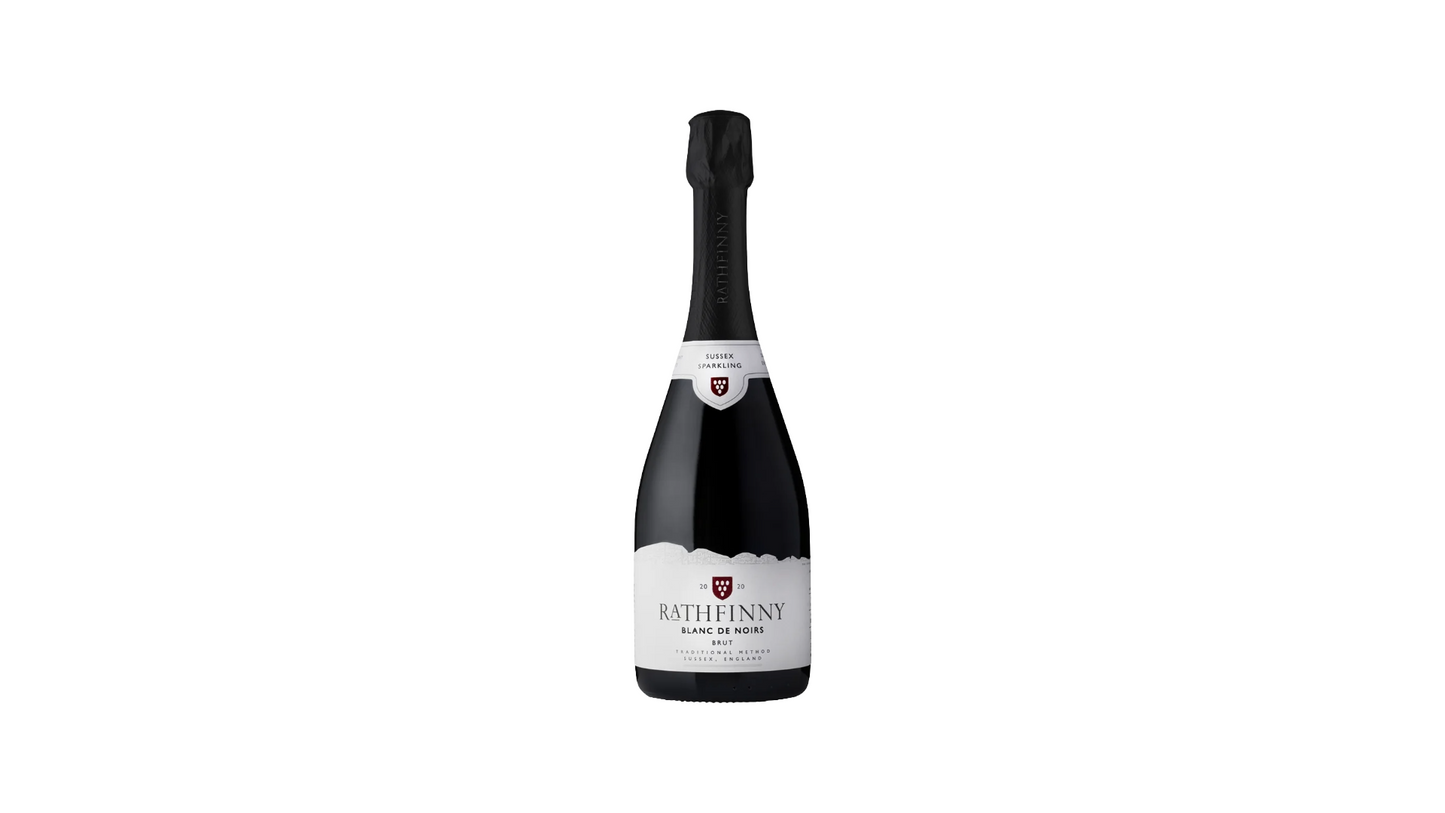
The intricate labels pay homage to the nearby chalk cliffs of the Seven Sisters.
Being less than 5 miles from the sea means frost and disease risk here is much lower, although the possible downside is that as an exposed, windy site the vines are particularly low yielding – a problem if volume and a low price are your number one objectives, yet a benefit if, like Rathfinny, you care only about quality, as lower yields deliver higher-quality fruit.
The vineyard is single-site and the main grape varieties planted at Rathfinny are Pinot Noir, Chardonnay, and Pinot Meunier.

Harvest
There is very little in the vineyard that is mechanised (although the winery has plenty of state-of-the-art kit such as automated bottling and disgorging lines): vines are pruned by hand and grapes are only ever hand-harvested.
Machine harvesting still doesn’t work for high quality sparkling wine - neither Champagne nor ‘English Sparkling Wine’ is allowed to be produced from machine harvested grapes.
Why? One word: quality. Whole bunches (i.e. including stems) are pressed very gently for minimal contact with the skins, to extract the finest, most delicate juice (so that the wine will eventually dance daintily across your tongue!).
Machine harvesters aggressively shake and vibrate the vines to detach berries from the stems and thus do not leave bunches intact, while damage to the skins imparts unwanted compounds for sparkling wine i.e. harsh/bitter phenolics, such as tannins and anthocyanins (the latter responsible for unwanted colour). Plus, of course, a machine harvester can’t discern between healthy and diseased/damaged fruit.
It is for the above reasons that, rather controversially, the Champagne region brings in something like 120,000 seasonal workers for the harvest.
On Rathfinny’s part, the estate employs over 200 members of the local community for the harvest who are given a proper sit-down free lunch every day, and a great big harvest party once all the fruit has made its way to their onsite winery.

Sustainability
As well as being B Corp Certified and taking a sustainable approach to harvesting, Rathfinny has also taken an innovative approach to protecting their grapes from birds who love to feast on them during the critical ripening period.
They employ falcons, hawks, and even a chilean blue eagle to patrol the skies. That saves a huge quantity of plastic netting as well as all the plastic clips that hold the netting down.

#WineObsessed
England: Rathfinny Estate - Blanc de Noirs 2020, Sussex Sparkling (BCorp Sustainable, Vegan-friendly))